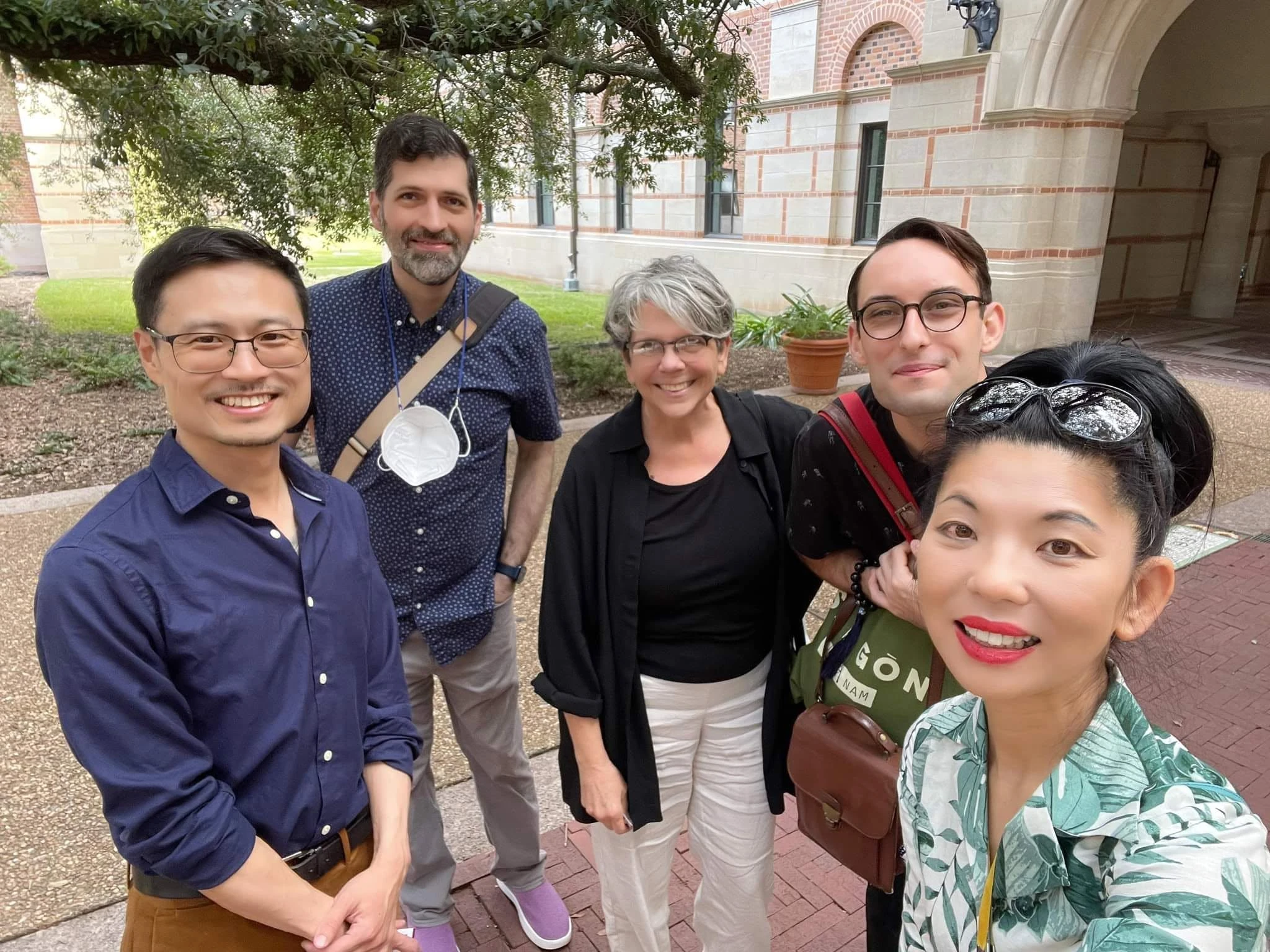
My stay at Rice University was one of the most stimulating moments of my journey in the United States. Invited by Professors Shih-shan Susan Huang and Eric Huntington, I had the opportunity to teach as a guest in two seminars directly connected to my research on the visual and material cultures of Buddhism in East Asia. Beyond the classes themselves, what struck me most was Rice’s intellectual openness, where art history, Buddhist studies, the history of religions, and transnational approaches could genuinely speak to one another.
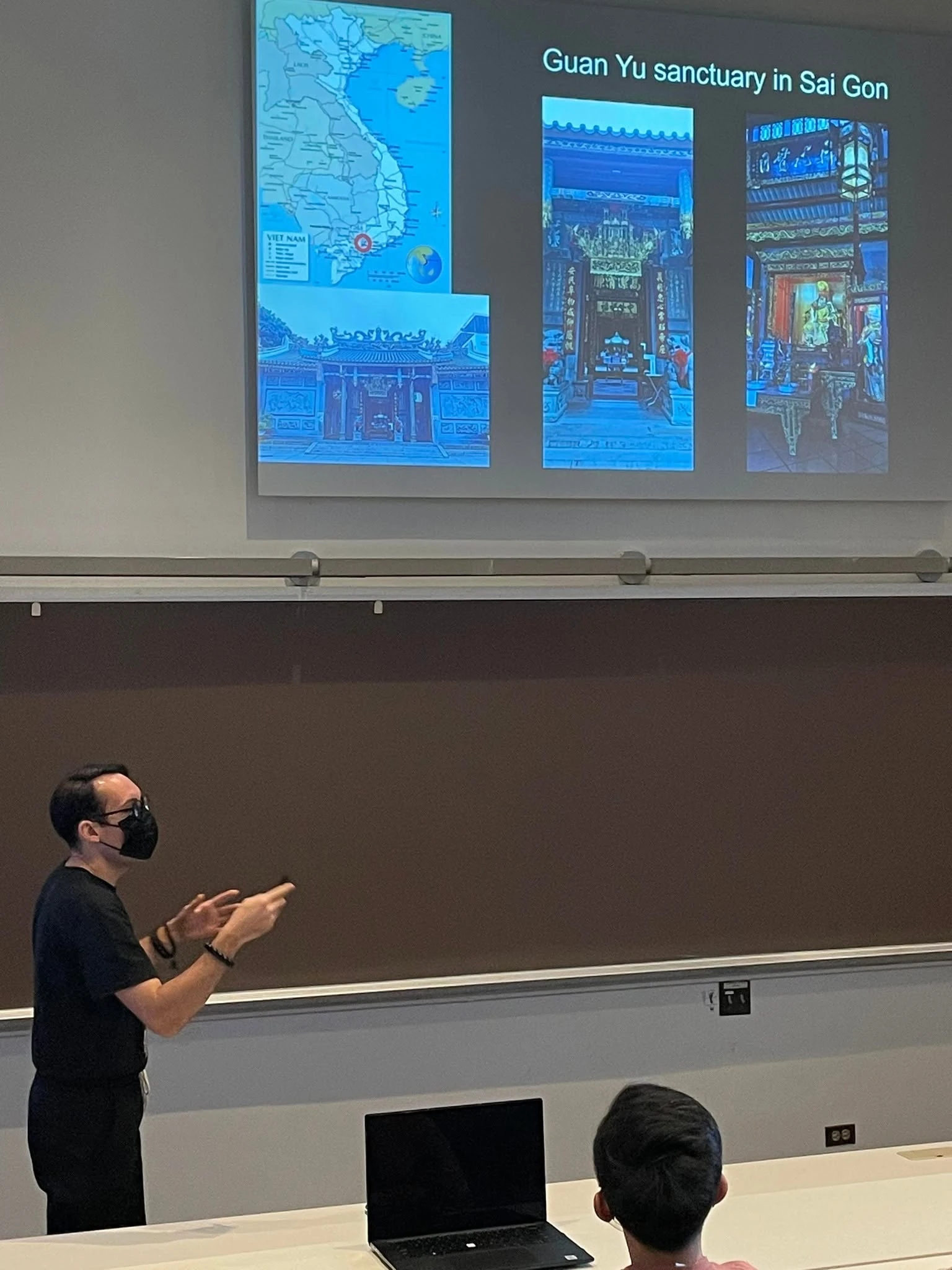
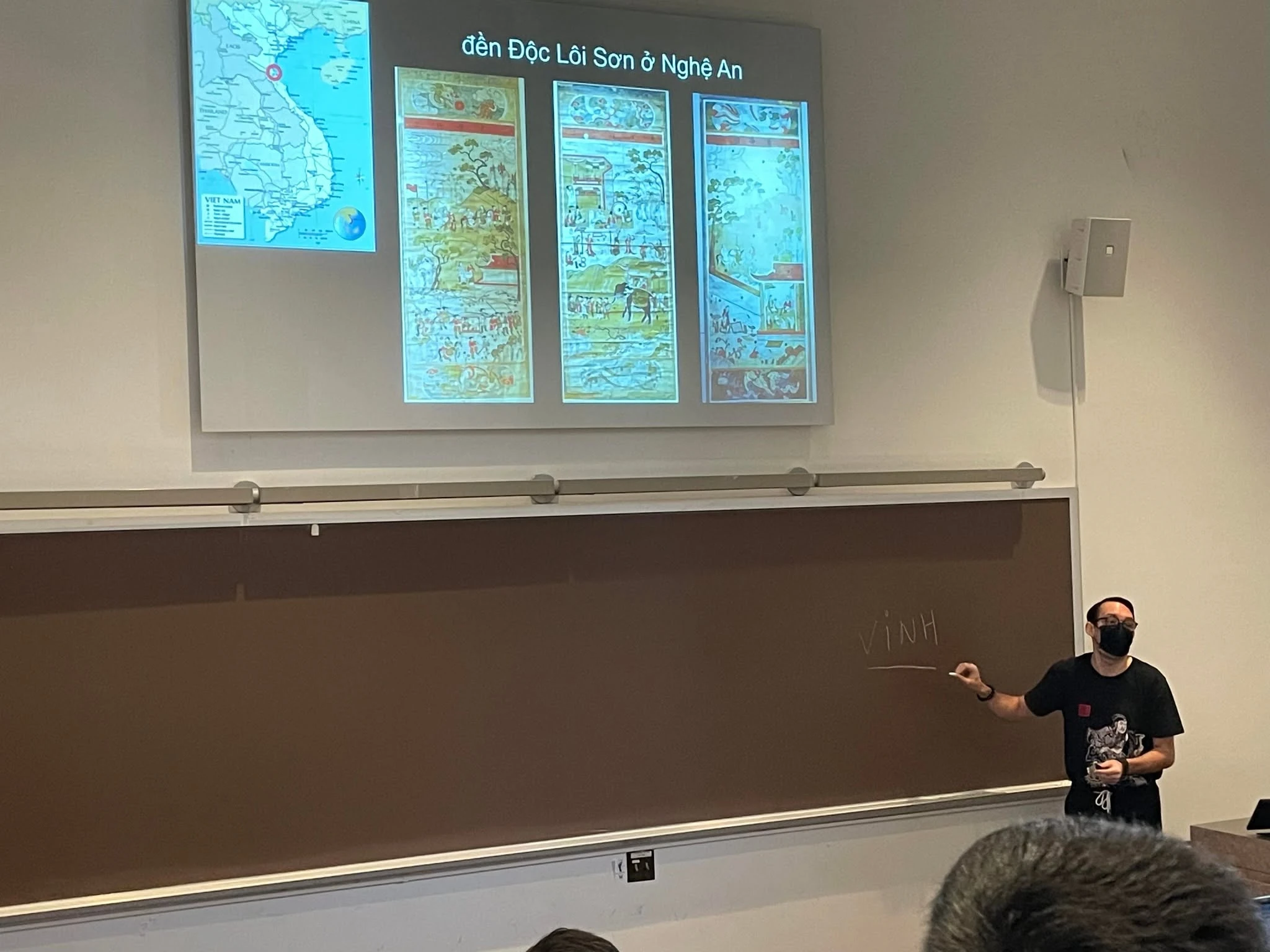
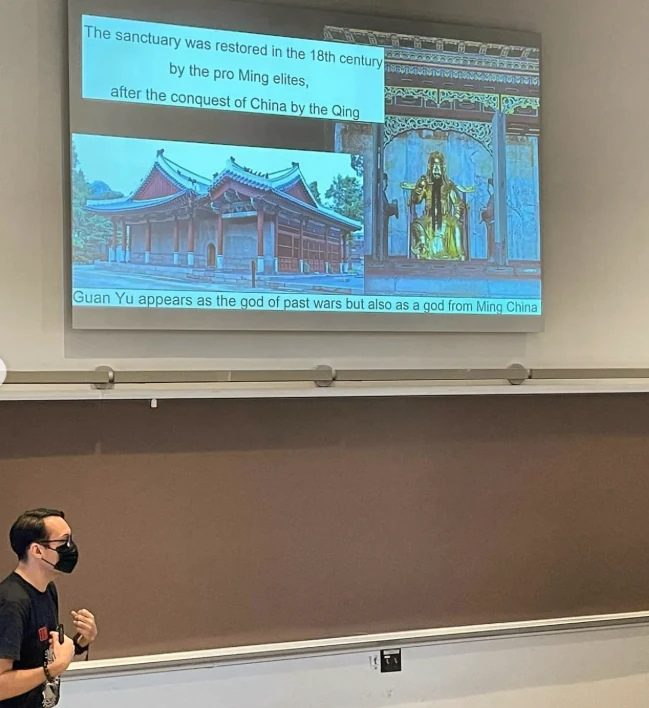
In Susan Huang’s seminar Art and Heritage of East Asia, I taught sessions on the art history of Korea and Vietnam. It was an opportunity to place these two traditions within an East Asian history that is not organized only around China and Japan: to trace the circulation of forms, techniques, objects, and religious models while also emphasizing the local transformations that give each tradition its own coherence.
In Eric Huntington’s seminar Buddhism and Gender, I developed another central aspect of my research: the role of women in commissioning Buddhist works of art in Korea. My aim was to shift attention from the object alone to the people who made it possible. Queens, court women, nuns, and laywomen emerge as agents of artistic production, capable of shaping iconographic choices, ritual functions, and the memories attached to images.
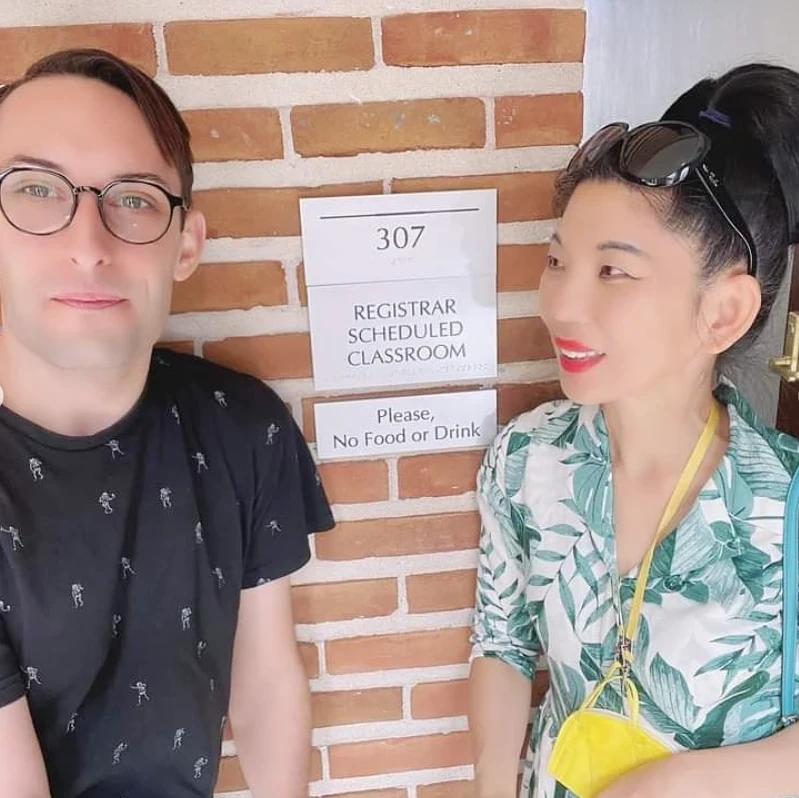
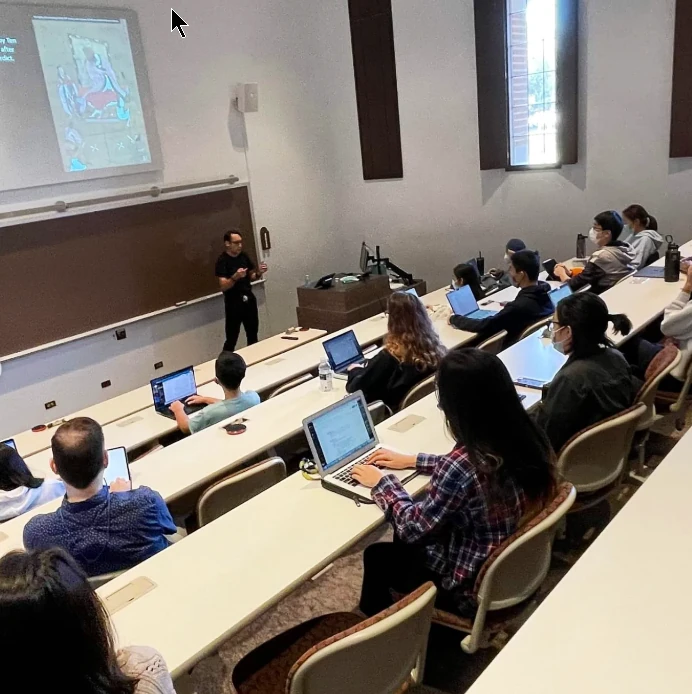
These presentations took on their full meaning through conversations with students and faculty. Teaching at Rice was not simply a matter of delivering prepared material: the questions pushed me to reformulate problems, refine comparisons between Korea, Vietnam, China, and Japan, and think more carefully about the ways art history can engage religious and social history.
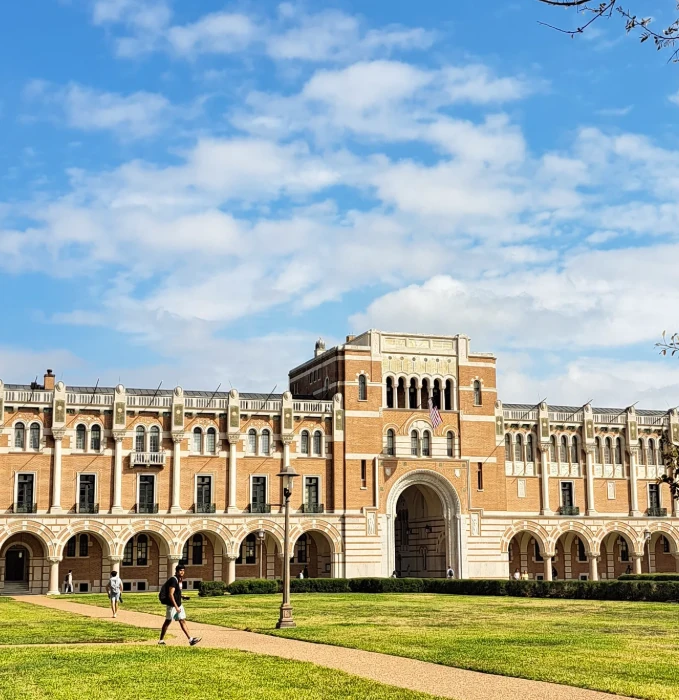
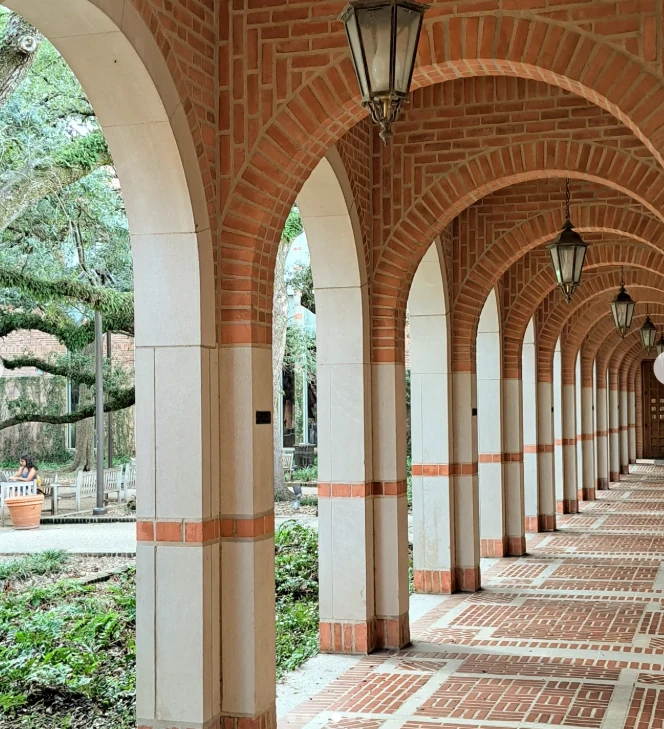
The institutional setting made these exchanges especially productive. Rice is a private research university chartered in 1891 and opened in 1912 under its first president, Edgar Odell Lovett. Set on a large tree-lined campus in Houston, it now holds a major place in American higher education: in 2026, U.S. News & World Report ranked Rice No. 16 nationally, with especially strong recognition for undergraduate teaching and value.
Houston itself provided an especially meaningful context for talking about Asia. Recent research by Rice’s Kinder Institute shows that by 2023 Asian residents made up about 9.9% of the wider Houston region, more than 655,000 people belonging to at least twenty-four distinct ethnic groups. Asian Indian, Vietnamese, and Chinese or Taiwanese communities are especially significant; the Vietnamese population alone exceeds 140,000 across the four counties studied. Asian studies in Houston therefore resonate with a social reality far beyond the university campus.
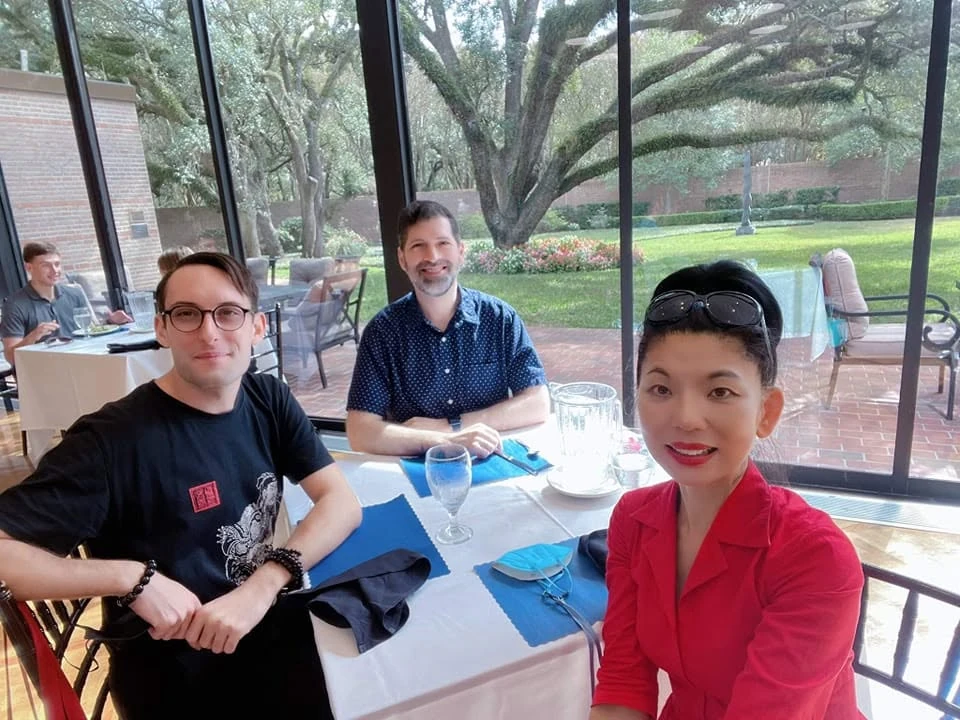
This connection between academic research and transnational realities lies at the heart of Rice’s Department of Transnational Asian Studies. The department brings together history, art history, religious studies, literature, languages, and the social sciences in close dialogue with the Chao Center for Asian Studies. For a scholar working on artistic and religious circulation across East Asia, it was an exceptionally stimulating environment.
I am deeply grateful to Susan Huang and Eric Huntington for their invitation, their trust, and the generosity of our conversations. None of this stay would have been possible without them. My thanks also go to the faculty and the entire Transnational Asian Studies team for such a warm welcome. At the end of this journey in the United States, that is what remains most strongly with me: the feeling of having been received not simply as a visitor, but as a colleague with whom to think, teach, and exchange ideas.
Key information
University: Rice University, Houston, Texas.
History: chartered in 1891; opened in 1912.
Department: Department of Transnational Asian Studies.
Teaching: Art and Heritage of East Asia; Buddhism and Gender.
Invited by: Shih-shan Susan Huang and Eric Huntington.