Research

Research

History of Buddhist art · East Asia

Images, rituals, power, and circulation

My research examines transformations in Buddhist art over the longue durée, from antiquity to the contemporary period, across China, Korea, Japan, and Vietnam. I study images and monuments not as isolated objects, but through their patrons, ritual uses, movements, and the political, social, and religious contexts in which they acquire meaning.

Image
↔ Ritual
↔ Power
Patrons
Circulation
Gender
Materiality
Architecture
Identities
China · Korea · Japan · Vietnam
01—06 · Research themes

A social, material, and transregional history of Buddhism

The different corpora are approached through their inscriptions, materiality, ritual practices, patronage networks, and the circulation of forms among East Asian societies.

Bhaisajyaguru Buddha Triad, Chosŏn royal-court Buddhist painting, 1565
THEME 01

Court Buddhist art and the Koryŏ–Chosŏn transition

Artistic continuities beyond dynastic rupture, royal patrons, the role of court women, inscriptions, religious policies, and image production from late Koryŏ to early Chosŏn.

Royal courtPatronsInscriptions
Bhaisajyaguru Buddha Triad · Chosŏn, 1565 · National Museum of Korea · KOGL Type 1 (attribution).
Detail of a Sweet Dew painting, gamnodo
THEME 02

Images, rituals, and performativity

The Buddhist image is studied as an object activated through ritual practices and dispositifs. Sweet Dew paintings 甘露圖 provide a particularly rich field for analyzing the emergence, function, and performativity of images.

甘露圖RitualsPerformativity
Detail of a gamnodo, replica of an eighteenth-century work · Daderot / Wikimedia Commons · CC0.
Hangzhou
杭州
Dadu
大都
Gaegyeong
開京
THEME 03

Circulation and artistic transfers

The circulation of artists, models, works, and practices between China, Korea, and Japan: Hangzhou–Dadu–Gaegyeong networks, the reception of Song and Yuan forms, the movement of objects, and the history of their preservation in collections.

TransfersProvenanceNetworks
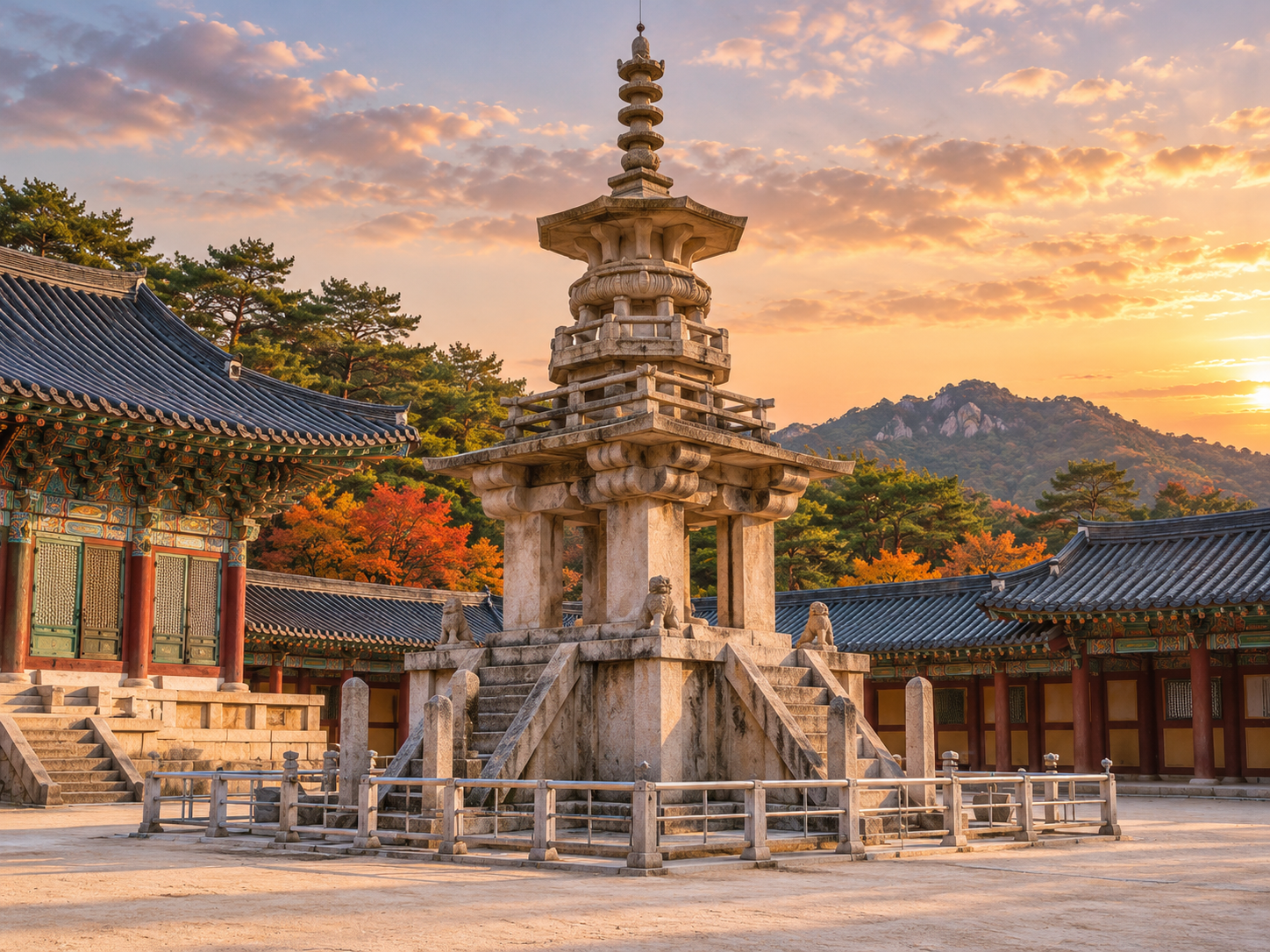
Tabot'ap at Pulguksa Monastery, Kyŏngju
THEME 04

Architecture, monasteries, and stupas

The evolution and persistence of architectural forms, the siting of monasteries, and the history of stupas. The corpora distinguish Silla, Paekche, Koguryŏ, Grand Silla, Koryŏ, and Chosŏn, as well as the different functions of monuments.

StupasMonasteriesLongue durée
Korean painting depicting one of the Ten Kings of Hell
THEME 05

Iconography, death, and salvation

Study of the Ten Kings 十王, the Buddhist afterlife, Avalokiteśvara, and processes of local adaptation of iconographic models. This research notably connects Korean and Vietnamese traditions.

十王AfterlifeKorea–Vietnam
Six of the Ten Kings of Hell · Chosŏn, 1798 · LACMA / Wikimedia Commons · public domain.
Water-Moon Avalokiteśvara, Koryŏ painting in the Freer Gallery of Art
THEME 06

Sources, materiality, and collecting history

Joint analysis of works, inscriptions, ritual texts, and material data; study of the rediscovery, reattribution, and provenance of Korean works preserved in Korea, Japan, Europe, and the United States.

MaterialityMuseumsAttributions
Water-Moon Avalokiteśvara · Koryŏ, fourteenth century · Freer Gallery of Art / Wikimedia Commons · public domain.
Cross-cutting theme · contemporary period

Queer and contemporary Buddhism

Pak Kurim 박그림 · Grim Park

Part of my research examines the relationships between Buddhism, contemporary art, gender, and queer identities in Korea. I am particularly interested in the work of Pak Kurim 박그림, who reworks the techniques and visual structures of Korean Buddhist painting to question identity, gender norms, and binary categories.

His Shimhodo 尋虎圖 series reinterprets the images of the ox-herding quest, Simudo 尋牛圖, by replacing the ox with the figure of the tiger. Transforming a traditional religious narrative into a contemporary language makes it possible to examine marginality, subjectivity, and the possibility of a queer iconography within inherited forms at the same time.

Current work

Research currently in development

Article in preparation

Long Koryŏ and stone stupas

Reconsidering dynastic periodization through architectural continuities and the longue durée of monumental forms.

Article in preparation

Iconographic origins of Water-Moon Avalokiteśvara

Connecting scriptural sources, legends, sacred topography, ritual practices, and the construction of the iconography.

Research in progress

Circulation between Hangzhou — Dadu — Gaegyeong

Reconstructing networks of people, objects, and artistic models linking Song and Yuan China with Koryŏ.

Research in progress

Sweet Dew 甘露圖

Analyzing the emergence of Sweet Dew paintings through rituals, image use, and their performative dispositifs.

Methods

Studying the work within its network

My approach combines art history, textual studies, epigraphy, material analysis, social history, fieldwork, and digital tools. The object is not merely described: it is situated within the network of relationships that determine its production, ritual activation, circulation, and reception.

Text
Inscription
Patron
Ritual
Work
Place
Materiality
Circulation
Provenance
Corpora, fieldwork & digital humanities

Explore the research

The site provides access to structured corpora, maps, thematic studies, and ongoing work that progressively document these research themes.