조선의 불교회화
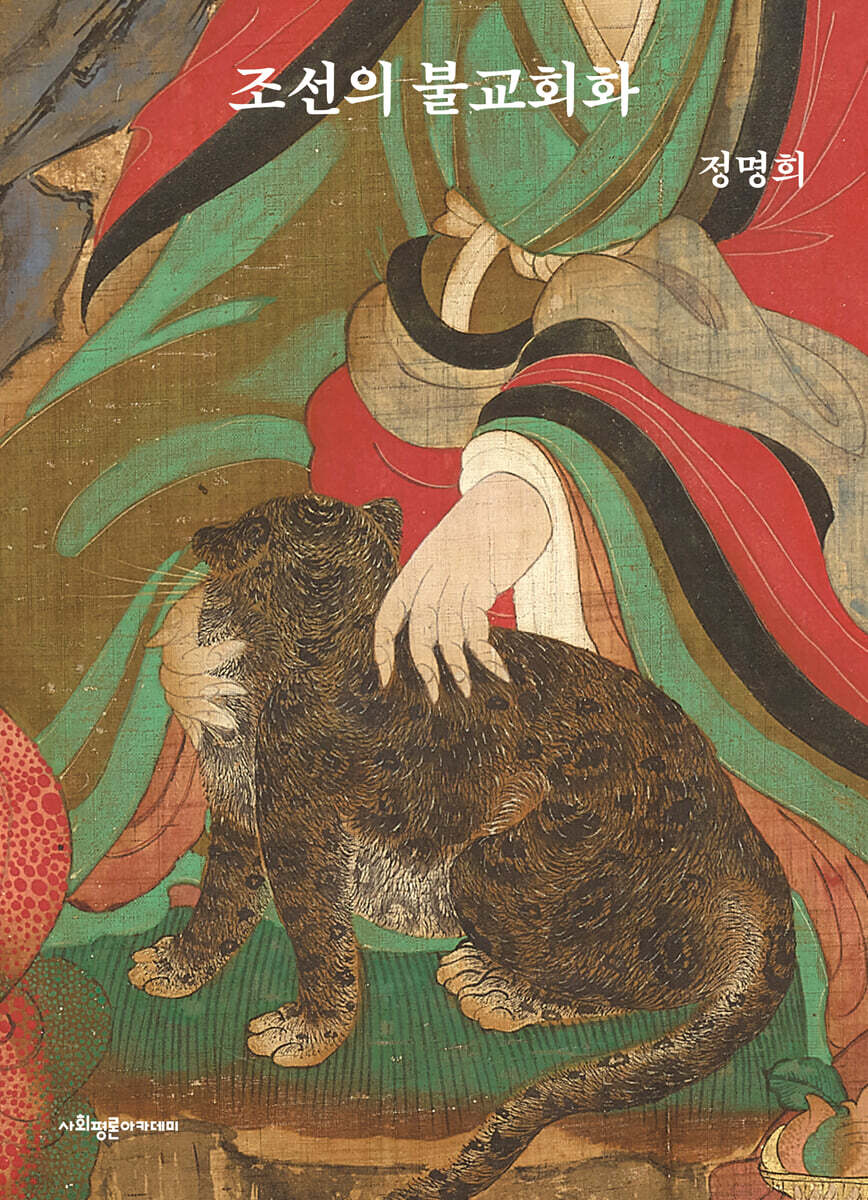
조선의 불교회화
Why read this book?
This book matters for Buddhist art history because it changes the basic question. Rather than asking only what a painting represents, Chŏng Myŏnghŭi asks where it was installed, before whom, during which ritual, and to produce what religious effect. A painting therefore ceases to be a flat image detached from its surroundings and becomes part of a system formed by sculpture, altar, architecture, officiants, worshippers and movement.
This approach clarifies why Chosŏn main halls came to contain multiple paintings with distinct ritual functions, why visual types could serve differently depending on location, and why monumental kwaebul (掛佛) moved outside the building to organize large public ceremonies. For Korean Buddhist art, it provides a stronger way of seeing objects too often studied only through iconography or style.
What the book helps us understand
- A Buddhist painting has a function, not only an iconography. Meaning changes with altar, hall, ceremony and the viewer’s physical relation to the image.
- The main hall is a structured ritual environment. The development of a three-altar system explains why several paintings could form a coherent ensemble in one building.
- Architecture shapes images. Statue size, the rear altar wall and actual sightlines affect composition.
- Paintings can move. When rituals expanded into the courtyard, sacred images moved with them; the monumental kwaebul made divine presence visible to a larger community.
- Ritual manuals are art-historical sources. They reconstruct the functions of altars and explain categories of paintings that stylistic analysis alone cannot adequately interpret.
Contribution to art history, Buddhism and Asian history
For art history, the major contribution is methodological: style and iconography are reinserted into concrete conditions of installation and visibility. The relationship between sculpture and the painting behind the altar shows that composition was not determined by doctrine alone; it also responded to how an image would actually be seen.
For Buddhist studies, paintings emerge as active components of ritual efficacy. They materialize invoked presences, distinguish ritual altars and participate in ceremonies directed toward the living, the dead and protective deities.
For Korean and East Asian history, the book highlights a characteristic Chosŏn solution: the main hall could operate as a polyvalent ritual space coordinating several visual and liturgical systems. This invites comparison with Koryŏ, China and Japan without reducing Chosŏn practice to mere continuity.
Works, ritual devices and sources to remember
- Chin'gwan-sa (津寬寺) and Suryukchae (水陸齋)Documents relating to the Water-and-Land rites help explain the formation of ritual arrangements with multiple altars.
- Hubult'aeng (後佛幀)The painting placed behind the Buddha makes it possible to study together the relationship between sculpture, painting, visibility and the organization of the upper altar.
- Kwanŭm posaldo (觀音菩薩圖)The painting of Avalokiteśvara placed behind the altar wall shows that less visible areas of the hall could also have a precise ritual function.
- Samjang posaldo (三藏菩薩圖)This painting associated with the middle altar is an important reference for understanding the organization of divine groups in Chosŏn liturgy.
- Kamnodo (甘露圖)The Painting of the Sweet Dew illuminates the lower altar, rites for the dead and practices of food offering.
- Kwaebul (掛佛)This monumental Buddhist painting, suspended outdoors during major ceremonies, shows how moving the image reconfigures the monastery’s ritual space.
The author’s central argument
Chosŏn Buddhist painting cannot be understood correctly when separated from space and ritual. Iconography, scale, placement and even composition respond to functions performed within concrete ritual arrangements. The history of these paintings is therefore also a history of changing main halls, the formation of ritual altars and the extension of ceremonies into outdoor space.
What this book changes in our understanding
After this book, it becomes difficult to study Korean Buddhist painting only through a catalogue photograph or museum display. Many works were designed to be partly hidden by sculpture, suspended at a specific height, moved for ceremonies or encountered collectively in temporarily transformed spaces. Their visual form was partly produced by these conditions.
The second change is historiographical. The density of paintings in Chosŏn halls no longer needs to be described as decorative excess or as evidence of doctrinal decline. It can instead be read as the coherent outcome of a ritual system. That correction matters for the history of religious architecture as much as for painting.
Limits of the book
Who is this book for?
Verdict
Its key achievement is to restore paintings to the environments for which they were made. A Buddhist image is not merely an iconography to identify: it acts within a space alongside statues, altars, officiants and communities. For Chosŏn studies, this is an exceptionally productive analytical framework.